
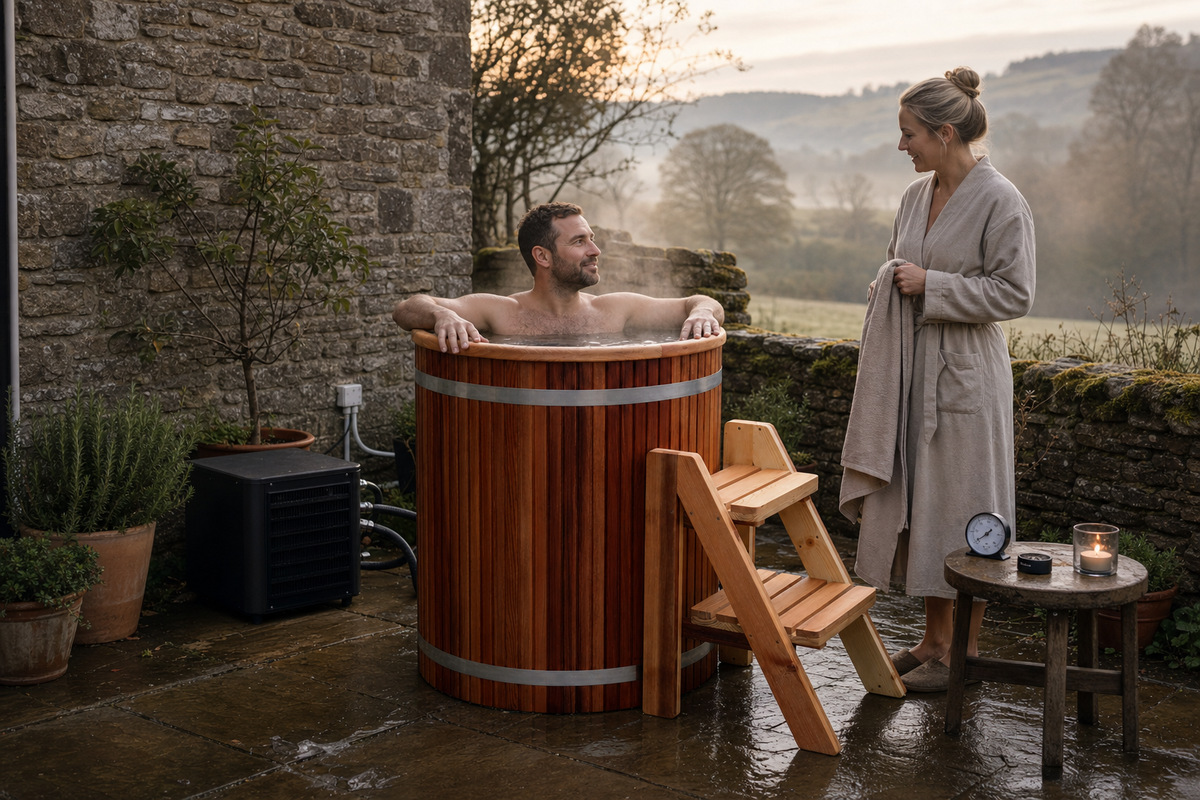
An ice bath for a UK home works best when the unglamorous details are solved first: a level base, safe access, drainage, clean water, weather protection and an easy way to measure temperature. Once the setup is convenient, cold plunging becomes a ritual instead of a weekend project.
Quick answer: what should you buy?
Choose an inflatable bath for flexibility and lower commitment, an insulated tub for repeat use, or a cedar barrel for a permanent garden feature. Add a compatible chiller if you want repeatable temperature control without relying on bags of ice. The right choice depends on your space, water routine and how often you will genuinely plunge.
Find your home ice bath setup
Need to move or store it?
Choose: an inflatable bath with a fitted cover. It suits patios, renters and seasonal routines.
Want a permanent garden ritual?
Choose: a robust insulated tub or cedar-and-steel barrel on a prepared base.
Want a set temperature year-round?
Add: a compatible chiller and filtration plan, installed exactly to the manufacturer’s guidance.
Plunging occasionally?
Keep it simple: measured cool water, hygienic cleaning and ice only when required may be enough.
1. Choose the safest practical location
A filled bath is heavy. Place it on a level, stable surface that can carry the total filled weight, away from unsupported decking edges. Keep the route clear so a wet person can step out without crossing loose stones, tools, cables or slippery steps.
- Privacy: enough to use the bath comfortably without creating a hidden, isolated setup.
- Visibility: another adult should be able to supervise a new user.
- Drainage: know exactly where hundreds of litres will go before filling.
- Water access: use a practical hose route that does not become a trip hazard.
- Weather: secure covers and lightweight parts against UK wind.
- Electrics: keep plugs, sockets and chillers protected and positioned to the product instructions.
2. Plan the water and drainage
Check the capacity in litres and the drain position. Confirm that local drainage can accept the volume without flooding borders, neighbouring property or indoor spaces. Do not empty treated water where it could harm plants, pets or waterways.
A fitted cover reduces leaves and debris, but it does not remove the need for water care. Showering before use, keeping feet clean, skimming debris and following the tub or chiller manufacturer’s cleaning instructions will extend the usable interval. Never mix chemicals casually; incompatible products can be dangerous.
3. Decide between ice and a chiller
| Cooling method | Best for | Trade-off |
|---|---|---|
| Seasonal UK tap water | Beginners testing a routine | Temperature changes with weather |
| Bags or blocks of ice | Occasional planned sessions | Ongoing cost, storage and inconsistent temperature |
| Compatible water chiller | Frequent, repeatable use | Higher upfront cost, maintenance and electrical planning |
A chiller should be matched to water volume, desired temperature, ambient conditions, filtration and flow requirements. Position it on a dry, stable surface with ventilation and weather protection. Use a qualified electrician when the instructions or location require one; never run an outdoor recovery setup from an improvised extension lead.
The Alder Current Compact Ice Bath Chiller is designed for customers who want more repeatable cooling. Check current compatibility details before pairing any tub and chiller.
4. How cold should an ice bath be?
There is no universal beginner temperature. Water below 15°C is cold enough to create a recognised cold-shock response, according to the RNLI cold-water guidance. That means a UK garden tub can be genuinely cold even without visible ice.
Begin conservatively, use a reliable thermometer and learn your response before making the water colder. The first objective is controlled breathing and a straightforward exit—not numbness. People with cardiovascular or blood-pressure concerns, circulation problems, pregnancy, relevant medication or other health uncertainty should seek medical advice first.
5. Build a sensible first-session routine
- Prepare your exit. Put a towel, robe, footwear and warm layer within easy reach.
- Tell another adult. Do not make early sessions a solitary experiment.
- Measure the water. Never judge cold by ice cubes or weather alone.
- Enter gradually. Keep your face out, settle your breathing and maintain a secure position.
- Keep it short. Leave before shivering becomes strong or coordination changes.
- Warm naturally. Dry, dress and move gently; avoid trying to prove toughness with rapid extremes.
- Record the result. Note temperature, approximate time and how you felt later.
6. Keep the setup clean and ready
A home plunge should be inviting enough to use but controlled enough to maintain. Keep a simple log of water changes, filter care and cleaning. Inspect the liner, valves, bands, hoses and cover regularly. Drain and protect the system during freezing conditions when the manufacturer requires it.
For inflatable tubs, keep sharp objects away and let the exterior dry before storage. For timber products, follow the specific wood-care guidance rather than applying a household coating. For chillers, maintain clear airflow and replace or clean filters on schedule.
7. Compare the right format for your garden
Inflatable and insulated ice baths
The Alder Coast Inflatable Ice Bath offers a generous horizontal shape for flexible home use. It can be a strong choice when you want an easier entry position or need a bath that can be moved when empty.
Cedar cold plunge barrels
The Alder Cairn Cedar & Steel Cold Plunge Barrel suits a more permanent, upright ritual and brings warm natural material into a British garden or courtyard.
Explore all current options in the Alder Ritual ice bath collection.
A realistic home ice bath budget
Include the bath, delivery, base preparation, cover, thermometer, water care, possible chiller, electrical work and ongoing energy or ice. If the product is large, check access and final positioning before ordering. Paying for the parts that make the ritual easy—cover, drainage and temperature control—can be better value than buying the largest tub.
Frequently asked questions
Can I keep an ice bath outside all year in the UK?
It depends on the specific tub, chiller and winterisation guidance. Freezing water can damage valves, hoses and equipment. Follow the manuals and drain or protect components when required.
Do I need a chiller for a home ice bath?
No. A chiller is mainly about convenience and repeatability. Seasonal water or ice can work for occasional use, but always measure the actual temperature.
How often should I change ice-bath water?
There is no single interval. It depends on users, pre-showering, filtration, sanitisation and cover use. Follow the product guidance and replace water immediately if cleanliness is in doubt.
Can I put an ice bath on decking?
Only if the structure has been confirmed suitable for the filled weight and dynamic use. Water is heavy; consult a competent professional when load capacity is uncertain.
Create a cold ritual that is easy to repeat
Compare UK-ready formats in our home ice bath collection, or contact Alder Ritual with your available space and preferred routine.
This guide is general information, not medical, structural or electrical advice. Always follow the current instructions for the exact products you purchase.


Leave a comment
This site is protected by hCaptcha and the hCaptcha Privacy Policy and Terms of Service apply.