
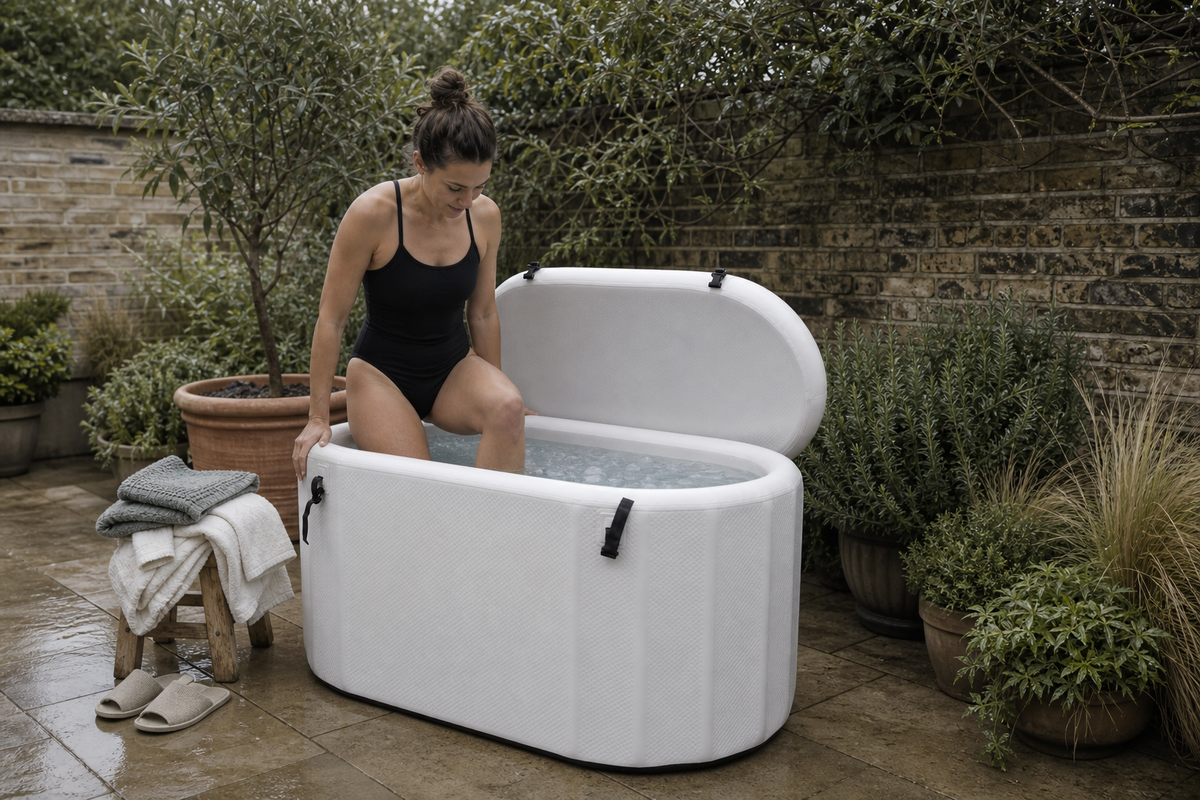
Cold plunge benefits are often described in dramatic terms. The useful truth is more measured: cold-water immersion can feel bracing and purposeful, may support short-term recovery after hard exercise, and can become a motivating ritual—but the research does not justify every claim you see online.
Quick answer: are cold plunges good for you?
For many healthy adults, a planned cold plunge can offer an energising mental reset and may reduce post-exercise soreness. Evidence for lasting improvements in immunity, weight loss or general health is limited. The safest approach is gradual, supervised, brief and guided by how you feel—not by an extreme social-media challenge.
Cold plunge benefits: evidence at a glance
Post-exercise recovery
Most credible use. Reviews suggest cold-water immersion can reduce delayed-onset muscle soreness after demanding exercise. It may be useful when rapid recovery matters, although it is not essential after every session.
Stress and mood
Promising, not settled. A 2025 systematic review found a reduction in stress at 12 hours in pooled results, but not immediately after immersion. People often report feeling alert or accomplished; individual responses vary.
Sleep and wellbeing
Early signals. Some studies report improvements in sleep or quality of life, but samples are small and methods differ. Treat these as possible personal outcomes rather than guarantees.
Immunity and metabolism
Not proven. Current evidence is too limited to promise an immune boost, detox, fat loss or disease prevention from a home plunge.
The most useful overview is the 2025 systematic review of cold-water immersion and wellbeing. For exercise recovery, a separate network meta-analysis of recovery strategies found cold-water immersion among the approaches that can reduce soreness after exercise.
What a cold plunge can feel like in everyday life
A realistic benefit is not a miracle—it is a change of state. The first seconds demand attention. Breathing becomes the task, distractions fall away and finishing a sensible session can create a clean sense of momentum. Some customers use that feeling before work; others use a plunge after training as a deliberate line between effort and recovery.
Think ritual, not punishment. A good session should leave you composed and capable, not shaky, frightened or determined to beat somebody else’s time.
Myths versus the evidence
| Popular claim | What a careful guide should say |
|---|---|
| “Cold plunges boost immunity.” | Research is limited and inconsistent. Do not rely on a plunge to prevent illness. |
| “Colder is always better.” | No. Lower temperatures increase strain. Consistency and control matter more than extremes. |
| “You need lots of ice.” | UK tap water can already be cold seasonally. Measure the water and start conservatively. |
| “It replaces recovery basics.” | No. Sleep, food, hydration and sensible training remain the foundation. |
How to start cold plunging more safely in the UK
- Check whether cold exposure is appropriate for you. Speak to a clinician first if you have a heart condition, blood-pressure concerns, circulation problems, are pregnant, take relevant medication or have any reason to be unsure.
- Start cool, not extreme. Measure the temperature. Learn your breathing response in cool water before considering colder sessions.
- Enter gradually. Cold water below 15°C can trigger cold-water shock. The RNLI explains the involuntary gasp and cardiovascular response; controlled entry helps you avoid an immediate shock.
- Keep the first sessions short. There is no prize for duration. Exit before coordination, speech or judgement deteriorates.
- Never plunge alone at the start. Keep another adult nearby, leave the door or lid unobstructed, and avoid alcohol.
- Warm up gradually afterwards. Dry off, dress warmly and let your temperature return steadily. Stop and seek help if symptoms concern you.
When should you use an ice bath after training?
Cold immersion is most relevant after unusually hard endurance work, tournaments or closely spaced sessions when short-term recovery is the priority. If your main goal is long-term strength or muscle gain, using intense cold immediately after every resistance session may not be the best default. A coach or sports professional can help you place it intelligently.
For a simple home routine, prepare the water before training, finish your cool-down, rehydrate, then use a short controlled plunge. Record temperature, duration and how you felt later that day. That personal log is more useful than copying a stranger’s protocol.
Choosing a home cold plunge
The right format depends on space and frequency. An inflatable bath such as the Alder Coast Inflatable Ice Bath is flexible for patios and seasonal use. A cedar-and-steel barrel such as the Alder Cairn Cold Plunge creates a more permanent garden ritual. For repeatable temperature control, explore a compatible option in our ice bath collection and consider a compact chiller.
Frequently asked questions
How cold should a beginner’s ice bath be?
There is no single safe number for everyone. Begin warmer than the extreme examples online, measure the water and prioritise calm breathing and an easy exit. Water under 15°C carries a recognised cold-shock risk.
How long should you stay in a cold plunge?
Short is sensible when you are new. Duration should never be a contest. Leave immediately if you feel dizzy, numb, confused, panicked or unable to control your breathing.
Can I cold plunge every day?
Some people enjoy a regular routine, but more is not automatically better. Build frequency gradually, monitor sleep, mood and training, and take rest days when you do not feel recovered.
Is a cold plunge safe for heart conditions?
Cold water rapidly changes heart rate and blood pressure. The British Heart Foundation advises people with heart conditions to seek medical advice before cold-water activity.
Build a ritual that fits your home
Compare portable and permanent options in our UK home ice bath collection, or ask Alder Ritual about space, access and a setup that is realistic for your routine.
This article is general information, not medical advice. Research develops over time and individual responses differ.

Leave a comment
This site is protected by hCaptcha and the hCaptcha Privacy Policy and Terms of Service apply.