
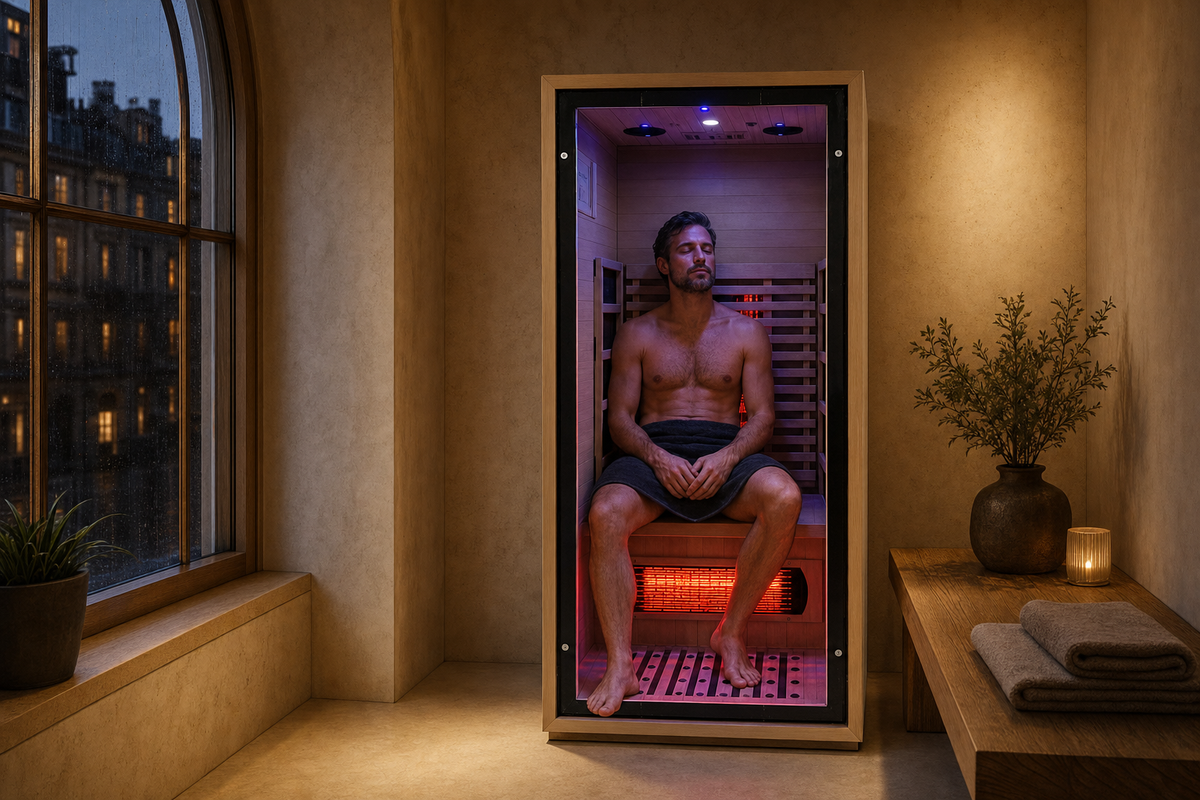
Infrared sauna benefits are best understood as part of a repeatable heat ritual: time set aside to slow down, warm up and step away from daily noise. Research into sauna bathing is encouraging in several areas, but infrared-specific evidence is still developing and should not be turned into promises of cures or “detox”.
Quick answer: what does an infrared sauna do?
Infrared heaters warm the body and the cabin at lower air temperatures than many traditional saunas. People often choose the gentler-feeling environment for relaxation, post-exercise comfort and a consistent home routine. Small studies report cardiovascular and quality-of-life signals, but stronger research is needed to confirm long-term outcomes.
Your infrared sauna session, from start to finish
Before: arrive hydrated
Drink normally through the day, avoid alcohol and allow your body to settle after intense exercise. Set the cabin according to its instructions and keep water nearby.
Begin: choose comfort over intensity
Start with a shorter session and a moderate setting. Infrared heat can feel deceptively gentle, so do not use discomfort as a target.
During: make space to switch off
Sit comfortably, breathe normally and notice how you feel. Leave immediately if you become dizzy, nauseous, weak or unwell.
After: cool down gradually
Stand carefully, rehydrate and let your temperature return steadily. A shower can feel refreshing; extreme contrast is optional, not required.
Infrared sauna benefits: what the research suggests
| Area | What we can reasonably say | Important limit |
|---|---|---|
| Relaxation and perceived stress | A quiet heat session can support a sense of calm and create distance from work or training. | Subjective wellbeing is personal and is not a treatment for a mental-health condition. |
| Circulation and cardiovascular response | Heat increases skin blood flow and heart rate while you are in the sauna. | Long-term clinical benefits are not established for every person or every infrared system. |
| Post-exercise comfort | Warmth may feel soothing for tired muscles and can form part of a recovery routine. | It does not replace sleep, nutrition, rehabilitation or medical care. |
| Quality of life in some conditions | Small studies have reported improvements in selected groups. | Evidence quality and protocols vary; do not generalise results into cure claims. |
A broad systematic review of dry sauna bathing found promising health signals but also highlighted limited evidence, varied protocols and uncertainty around the best dose. A separate review of regular dry sauna bathing reached similarly cautious conclusions. Much of the better-known long-term research concerns traditional Finnish sauna use, so it should not automatically be applied to every infrared cabin.
Full-spectrum, far infrared and traditional sauna: what changes?
Far infrared sauna
Far infrared systems use wavelengths at the far end of the infrared spectrum. They are popular for cabins designed to feel comfortable at lower air temperatures. The experience is usually dry, quiet and easy to fit into a home schedule.
Full-spectrum infrared sauna
Full-spectrum products combine near, mid and far infrared emitters. The important buying questions are not marketing labels alone: look at heater placement, controls, electrical requirements, usable interior space, warranty and the manufacturer’s stated operating range.
Traditional sauna
Traditional saunas primarily heat the air, usually reaching higher cabin temperatures. Some allow water over heated stones for a more humid burst. If you value very hot air and a classic bathing tradition, traditional may suit you; if you prefer a lower-temperature dry cabin and straightforward home control, infrared may feel more accessible.
What infrared sauna use can add to your week
The strongest everyday outcome may be behavioural. A cabin at home removes travel, booking and changing-room friction. That makes it easier to protect 15 or 20 quiet minutes, close the door and create a repeatable transition—from training to recovery, or from work to evening.
- A calmer finish to the day — a defined pause can help you leave screens and tasks outside the cabin.
- Comfort after movement — controlled warmth can feel welcome after walking, cycling or gym work.
- A ritual you can repeat — home access turns an occasional spa visit into something you can plan around real life.
- Private, personal settings — you control timing, temperature and atmosphere within the product guidance.
- Shared wellbeing time — larger cabins can create a screen-free moment with a partner or family member.
How often should you use an infrared sauna?
There is no universal schedule. Start with fewer, shorter sessions and build only if you tolerate heat well. Frequency should fit your hydration, health, training and the operating guidance for your cabin. A simple approach is to log duration, setting, energy and sleep for two weeks, then adjust based on your actual response.
More heat is not automatically more beneficial. Stop if the session becomes something you endure rather than a ritual that leaves you settled.
Who should speak to a healthcare professional first?
Seek personalised advice if you have cardiovascular or blood-pressure concerns, are pregnant, have difficulty regulating temperature, take medication that affects hydration or heat response, or have any condition that makes heat exposure uncertain. Children and anyone unable to leave independently require particular caution. Never combine sauna use with alcohol or recreational drugs.
Replace fluids after sweating. The NHS dehydration guide explains signs such as thirst, dark urine, dizziness and tiredness.
Choosing an infrared sauna for a UK home
Begin with people and placement. For a compact solo ritual, see the Alder Ember Full-Spectrum Infrared Sauna. For an indoor cabin with additional space, compare the Alder Grove Indoor Infrared Sauna. Households and hospitality spaces can explore the larger capacity options in the Alder Lodge Far Infrared Sauna.
Measure ceiling height, doorways, floor area and ventilation; confirm the exact electrical requirements with the product specification and a qualified installer. Browse the full infrared sauna collection before deciding.
Frequently asked questions
Does an infrared sauna detox the body?
Sweating is how the body helps regulate temperature. It is not accurate to market sauna use as a proven detox treatment; the liver and kidneys perform the body’s primary waste-processing roles.
Can an infrared sauna help skin?
Warmth and perspiration can leave skin feeling temporarily refreshed, but sensitive skin may react to heat. Clean the cabin, shower after use and follow professional advice for an active skin condition.
Can I use an infrared sauna after exercise?
Many people enjoy it, but cool down and rehydrate first. After very hard training, illness or dehydration, additional heat may be the wrong choice.
Find the right heat ritual for your space
Explore Alder Ritual’s home infrared saunas, then speak to us about capacity, access and the room you have in mind.
This article provides general information, not medical advice. Evidence and individual heat tolerance vary.


Leave a comment
This site is protected by hCaptcha and the hCaptcha Privacy Policy and Terms of Service apply.